Travel Document Checklist: Printable + Digital Organizer
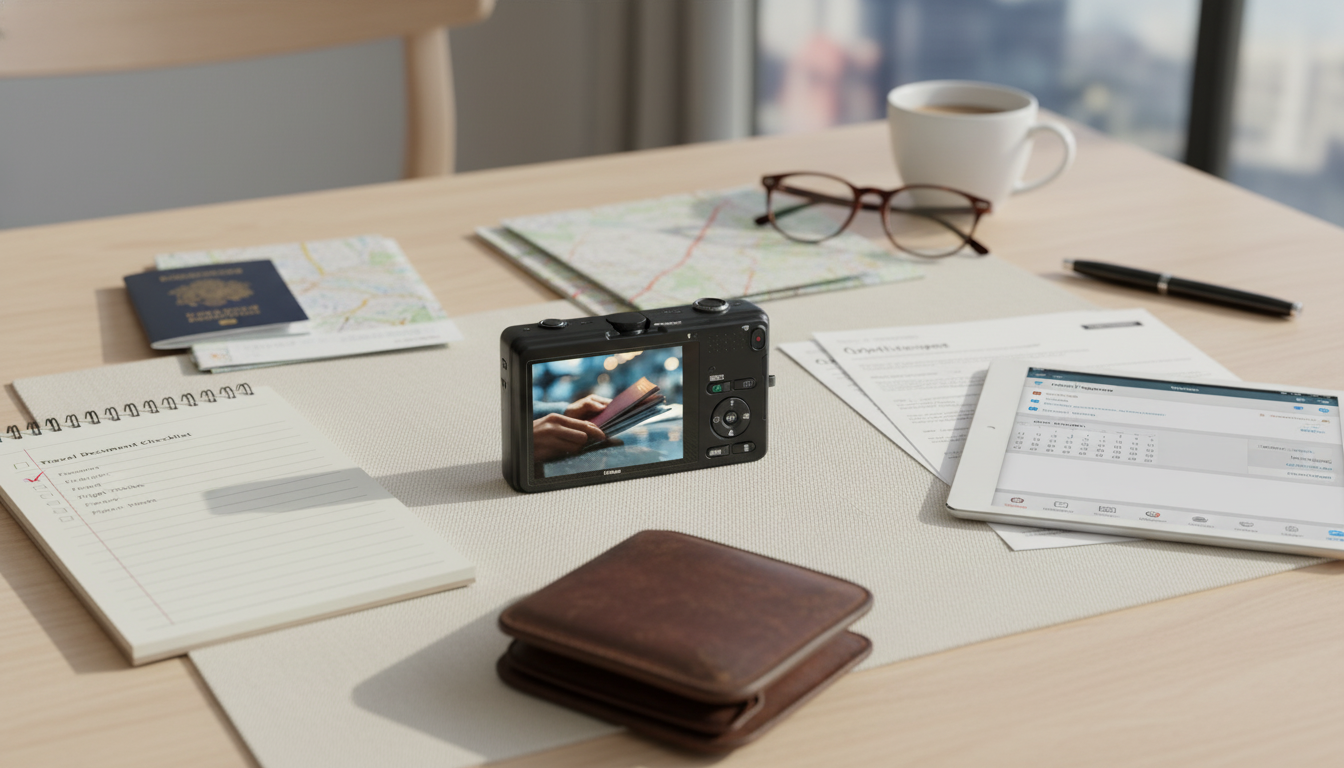
Travel-Ready Document Checklist: Printable + Digital Organizer for Smooth Trips
Travel plans can unravel fast when a single document is missing or stored in the wrong place. A travel-ready document checklist helps confirm passports, IDs, bookings, medical details, and emergency contacts are complete and accessible—both on paper and on a phone—so departure day feels calm and organized.
What “travel-ready documents” really means
Being “travel-ready” isn’t about carrying every piece of paper you own—it’s about having the right proof available at the moment someone asks for it. Most travel situations fall into five buckets: proof of identity, proof of entry, proof of plans, proof of coverage, and proof of funds.
- Proof of identity: government-issued ID that matches your booking.
- Proof of entry: passport and any visa/ETA documentation required for your destination.
- Proof of plans: confirmations for transport and lodging, plus addresses for arrival forms.
- Proof of coverage: travel insurance details and medical documentation if needed.
- Proof of funds: access to money (and occasionally a border officer may ask to see evidence).
The most reliable setup is a two-version system: a secure digital set that works offline, plus a minimal printed backup kept separate from your originals. This covers multiple checkpoints—airline check-in, border control, car rental, hotel check-in, and medical care—without forcing you to dig through a messy photo roll or email inbox.
Essential document checklist before you travel
Use this checklist to confirm you have what you need, then store items in a way that makes them fast to retrieve at the right time.
Core documents to gather
- Identity & entry: passport (validity check), visa/ETA (if required), driver’s license/state ID, trusted traveler numbers (if applicable).
- Transportation: flight/train/bus confirmations, boarding passes (when available), car rental confirmation, international driving permit (where required).
- Lodging & itinerary: hotel/hostel addresses, check-in instructions, tour tickets, day-by-day plan for multi-stop trips.
- Money & access: primary and backup cards, bank contact numbers, proof of funds (some borders request it), local currency plan.
- Health: travel insurance policy, copies of prescriptions, vaccination records when needed, allergy/medical alert details.
- Family & minors: consent letter (if traveling with one parent/guardian), copies of birth certificates (as needed), school or custody documents if relevant.
- Work & special travel: letters of invitation, conference registration, equipment paperwork, pet health certificate (if traveling with animals).
Quick checklist by travel moment
| Travel moment | Documents to have ready | Where to store |
|---|---|---|
| Before leaving home | Passport/ID, visas/ETAs, insurance policy, itinerary, emergency contacts | Printed folder + offline phone copy |
| Airport/train station | Boarding pass, booking reference, passport/ID, baggage info | Front pocket / easy-access wallet |
| Border/immigration | Passport, visa/ETA, lodging address, onward ticket, proof of funds (if asked) | Secure but reachable pouch |
| Hotel check-in | Reservation, ID, payment card, address and check-in notes | Phone copy + printed backup |
| Car rental / driving | Driver’s license, rental booking, insurance details, IDP (where required) | Separate from passport when possible |
| Medical need | Insurance card/policy, prescriptions, allergy list, emergency contact | Phone + printed mini card |
Printable vs digital: the stress-free “two-layer” system
A smooth trip usually comes down to redundancy without clutter. The two-layer system gives you options when Wi‑Fi fails, an app logs you out, or a phone battery dies.
- Digital layer: scan/photograph key documents, save in an encrypted vault or secure cloud, and make sure critical items are available offline (airplane mode test).
- Printable layer: keep a slim set of essentials (itinerary, insurance, key numbers, copies of ID) in a travel folder; avoid printing sensitive numbers in full when possible.
- Separation strategy: store backups in a different bag than originals to reduce risk from loss or theft.
- Share-ready emergency pack: a single page with contacts, embassy/consulate info, and plan details for a trusted person at home.
For official guidance on entry requirements and destination updates, review the U.S. Department of State — International Travel resources before you finalize your document set.
A simple timeline: when to check what
Spacing out document prep prevents last-minute surprises and gives you time to replace anything missing.
- 4–8 weeks out (international): confirm passport validity and visa/ETA requirements; request replacements early if anything is expiring.
- 2–4 weeks out: purchase/confirm insurance, collect prescriptions, confirm lodging addresses, gather any minor-travel letters or pet documentation.
- 7 days out: download tickets, screenshot key confirmations, save maps/addresses offline, verify card travel notices and bank contact numbers.
- 48 hours out: re-check check-in requirements, baggage rules, and any destination entry updates; print the minimal backup set.
- Departure morning: run the checklist once more—passport/ID, phone, wallet/cards, confirmations, meds—then lock the rest into the organizer.
For airport-specific reminders, the TSA — Travel Checklist is a helpful last-week reference.
How to store documents safely (without slowing yourself down)
For health-related travel planning (vaccines, destination advisories, and medication considerations), consult CDC — Travelers’ Health.
Common document mistakes that cause delays
A ready-to-use organizer for packing and planning
- Travel-Ready Document Checklist (printable + digital organizer)
- Daily Affirmations for Abundant Wealth (audio course)
FAQ
What travel documents should always be printed?
Print a minimal set: your itinerary with addresses, insurance details, emergency contacts, and copies of your ID/passport. Keep originals secure, and avoid printing full sensitive numbers when a reference number will do.
How do you store digital copies of travel documents safely?
Use encrypted storage (such as a password manager or secure vault), enable device lock, and confirm your most critical files are accessible offline. Avoid leaving document scans in unsecured email drafts or unprotected photo albums.
What should be in a travel organizer for international trips?
Include passports, visas/ETAs, transport and lodging bookings with addresses, proof of onward travel (when applicable), insurance, prescriptions, payment backups, and embassy/consulate contact details. Keep originals and backup copies separated to reduce risk if something is lost.











Leave a comment