Calming Routines for Nervous Travelers (Stress-Free Trip)
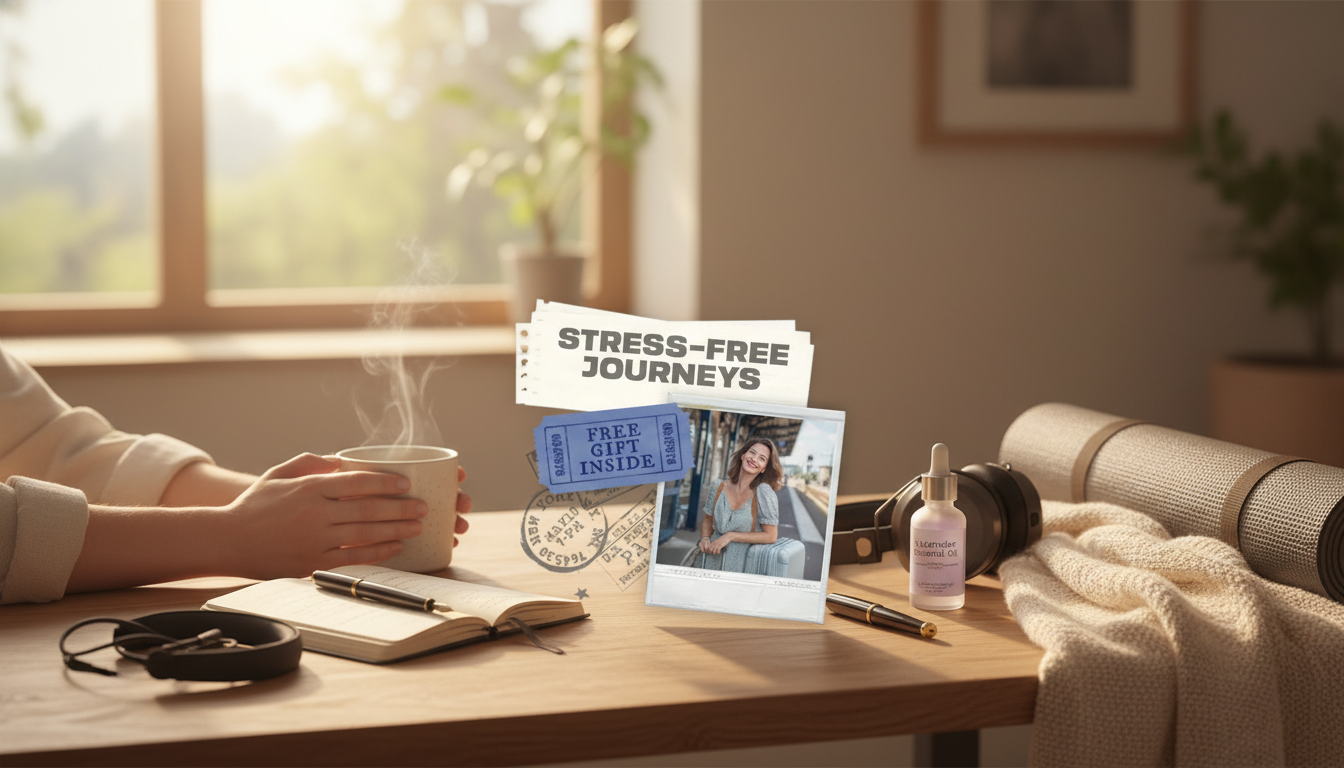
A Nervous Traveler’s Guide to Stress-Free Journeys: Calming Routines for Nervous Travelers
Travel nerves are common—even for experienced travelers. The difference between a spiraling day and a manageable one often comes down to simple, repeatable routines: what happens before leaving home, how the body is supported during transit, and which grounding steps are used when anxiety spikes. The goal isn’t to feel “perfectly calm.” It’s to shorten the surge, lower the intensity, and keep moving through real-world travel—tight connections, busy terminals, turbulence, unfamiliar places, and the pressure to enjoy every moment.
Know the two kinds of travel nerves
Most travel anxiety shows up in two forms, and each responds to a slightly different routine.
- Anticipatory anxiety: worry loops days before leaving—packing doubts, “what-ifs,” and sleep disruption.
- In-the-moment anxiety: the body’s alarm during transit—crowds, claustrophobia, turbulence, or feeling trapped.
- A useful goal: reduce duration and intensity, not eliminate nervousness completely.
- Choose travel-proof routines: portable, discreet, and fast—especially for airports, stations, and rideshares.
For a quick overview of how stress affects the mind and body, the American Psychological Association (APA) guide to stress is a helpful reference.
Pre-trip calming routine (the 48-hour setup)
The best time to lower travel stress is before the suitcase is zipped. A 48-hour setup prevents the “double stress” of both uncertainty and rushing.
- Create a one-page plan: itinerary highlights, addresses, confirmation numbers, and a short “if X happens, then Y” list (missed flight, delayed train, lost item).
- Pack by categories, not by items: documents, meds/health, clothes, chargers, comfort kit—then check each category once.
- Practice a 3-minute wind-down before bed: dim screens, stretch neck/shoulders, and do slow breathing to cue sleep.
- Cut the morning rush: set clothes aside, pre-pack snacks, and charge devices the night before.
- Choose a single non-negotiable comfort item (scarf, hoodie, earplugs, small pillow) to reduce sensory overload.
| Timeframe | Do this | Why it helps |
|---|---|---|
| 48–24 hours before | Save confirmations offline; share itinerary with a trusted contact | Reduces uncertainty and “what if I lose service?” worry |
| 24–12 hours before | Pack by categories; place essentials in one pouch | Prevents repeated checking and last-minute scrambling |
| Night before | Set alarms + buffer; prepare clothes/snacks; charge devices | Reduces morning pressure and decision fatigue |
| Day of travel | Arrive early; do one grounding practice before entering the terminal | Starts the day with a calmer baseline |
If you travel with prescriptions, review the CDC guidance on traveling with medication so you’re not solving a preventable problem mid-trip.
A five-minute routine for airports, stations, and terminals
Terminals can feel like sensory pinball. This routine is designed to be subtle and repeatable while still being effective.
- Pick a “home base” spot: a wall, corner, or quieter gate area to reduce the feeling of being surrounded.
- Do a quick body scan: unclench jaw, drop shoulders, relax hands, soften belly. Small muscle releases reduce “alarm” signals.
- Use a sensory shield: noise-canceling headphones or earplugs, sunglasses/hat, and a playlist that signals safety.
- Choose one next step: “Find gate,” “fill water,” “use restroom,” “sit for 3 minutes.” One step keeps the mind out of spirals.
- If crowds trigger panic: face an exit path, stand at the edge of the line, and hold a small object to anchor attention.
Calming routines for planes, trains, and long rides
Once you’re seated, the nervous system often ramps up because it senses “no easy exit.” The key is to give your body steady cues of safety.
- Breathing that doesn’t backfire: try a gentle pattern (inhale 4, exhale 6) rather than forcing deep breaths if that feels uncomfortable. The NHS breathing exercises for stress page includes simple options.
- Micro-movement every 30–60 minutes: ankle circles, calf squeezes, shoulder rolls; movement reduces restlessness and signals safety.
- Turbulence or sudden braking plan: plant feet, press hands together for 10 seconds, then release. Repeat while labeling: “uncomfortable, not dangerous.”
- A “distraction stack”: one audio (podcast/playlist), one visual (show/book), one tactile (stress ring, textured fabric).
- Food and hydration basics: steady snacks and water; avoid over-caffeinating, which can mimic anxiety symptoms.
When panic rises: a discreet reset you can do anywhere
Hotel and destination routines that prevent the next spike
Turn routines into a simple travel plan
A structured companion for calmer travel days
If you’d like routines laid out in a clear, practice-friendly format, A Nervous Traveler’s Guide to Stress-Free Journeys: Calming Routines for Nervous Travelers is designed for exactly that: quick steps you can rehearse at home and use during real travel moments.
For travelers who like a steady mindset cue during packing or morning prep, Daily Affirmations for Abundant Wealth (audio course) can also work as a calming “start signal” for the day—especially when you pair it with slower breathing and a single next step.
FAQ
What if anxiety hits right before boarding?
Step slightly to the side, soften your shoulders and jaw, and exhale longer than you inhale for 1–2 minutes. Then choose one next action—scan your pass, find your seat, sit—and let “one step at a time” carry you forward.
How can nervous travelers sleep in a new place?
Keep a consistent wind-down, reduce light and noise, and set out essentials so your brain doesn’t stay on “watch.” A familiar audio track or white noise can become a reliable cue that it’s safe to sleep.
Are there quick calming techniques that won’t draw attention in public?
Use quiet muscle release (hands, shoulders, jaw), press your feet into the floor, count neutral objects you can see, or do a slow-exhale pattern. These look like normal pauses and can be repeated without anyone noticing.











Leave a comment