Printable Toy Safety Checklist: Shop With Confidence

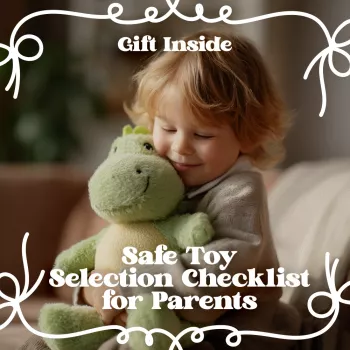
Safe Toy Selection Checklist for Parents: A Printable Guide for Confident Toy Buying
Toy shopping gets easier when safety checks are simple and repeatable. A quick look for age fit, small-part hazards, material quality, durability, and (for connected toys) privacy controls can prevent common problems before a toy ever reaches the playroom. Below is a practical, parent-friendly system you can use in stores, online carts, and even gift exchanges—plus a printable checklist you can keep on your phone or tuck into a wallet.
Start With the Child: Age, Stage, and Supervision
“Age grade” is more than a suggestion—it’s a shorthand for common risks (like small parts or cords) that may not match a child’s abilities on a given day. Start by filtering toys through how your child actually plays at home.
- Match the labeled age grade to development, not just birthdays. Some “advanced” toys still include detachable pieces, cords, or battery doors that aren’t ideal for younger kids who mouth or throw toys.
- For kids under 3, treat small parts as a hard stop. Avoid small detachable components and “small ball” pieces that can obstruct airways.
- Factor in real-life supervision. A toy that’s fine during one-on-one play may be risky during busy mornings, playdates, or when older siblings are building sets nearby.
- Consider sensory needs and motor skills. Chewing, limited grip strength, or unsteady balance can turn an otherwise safe item into a choking, fall, or breakage risk.
Fast Screen: The 60-Second Safety Check Before Buying
Whether you’re holding a box in a store aisle or scrolling a listing online, a rapid scan can catch most red flags.
- Check labeling and seller clarity. Look for a manufacturer name, model info, age grade, and specific warnings; skip vague or unbranded listings.
- Hunt for high-risk features first. Small detachable parts, button/coin batteries, magnets, and long cords/straps deserve immediate attention.
- Inspect edges and points. Avoid sharp seams, exposed wires, or brittle plastic that looks like it could splinter.
- Use your senses. Strong chemical odors, sticky coatings, or flaking paint are reasons to pass.
- Confirm returns and contact details. Clear seller/manufacturer info matters if a defect appears or a recall is issued later.
For additional guidance, the U.S. Consumer Product Safety Commission (CPSC) toy safety page and the American Academy of Pediatrics toy safety guidance are reliable references when you’re unsure.
Hazard Hotspots to Watch: Small Parts, Magnets, Batteries, Cords, and Water
Most serious toy-related incidents trace back to a small set of repeat offenders. If you remember nothing else, remember these.
- Choking and aspiration: Any part that can detach during normal play becomes a risk for young children. Pay special attention to eyes, buttons, wheels, and decorative add-ons.
- High-powered magnets: If swallowed, magnets can attract through intestinal walls and cause severe internal injury. Avoid small magnets or weak housings—especially around toddlers and pets.
- Button and coin batteries: Choose toys with battery compartments that require a tool to open, with screws that are present and secure.
- Strangulation risks: Keep cords, strings, and straps short and away from sleep spaces. Be cautious with pull toys or long loops for younger kids.
- Water and bath toys: Favor designs that dry fully or can be opened for cleaning, since trapped water can grow mold and irritate sensitive airways.
Many reputable toys are designed to align with standards such as ASTM F963 (toy safety standard), but it’s still smart to verify the specific design details in front of you.
Material and Build Quality: What to Check for Plastics, Paint, and Plush
Smart Toys and Connected Play: Privacy and Security Checks
Printable Safe Toy Selection Checklist (Use In-Store or Online)
| Check | What to look for | Pass/Notes |
|---|---|---|
| Age and stage fit | Age grade matches development; safe for mouthing/throwing; supervision needs are realistic | |
| Small parts and detachables | No parts that can come off with pulling/twisting; no small balls for young children | |
| Magnets | No small/high-powered magnets; housings are secure and cannot be accessed | |
| Button/coin batteries | Battery door requires a tool; screws present and tight; batteries not accessible | |
| Cords/strings/loops | Short cords; no long loops; safe design around neck/crib areas | |
| Edges and pinch points | No sharp points, exposed staples, finger traps, or rough seams | |
| Paint/coatings/materials | No flaking paint, shedding glitter, strong chemical odor, sticky residue | |
| Durability | Withstands squeezing, bending, and light pulling without cracking or breaking | |
| Smart-toy privacy | Clear data practices; parental controls; mic/camera can be disabled; updates supported | |
| Recalls and seller info | Manufacturer and contact details are clear; quick recall check before gifting |
Downloadable guides available
- Safe Toy Selection Checklist for Parents | Printable Safe Toy Selection Checklist | Child Safety Guide for Smart Toy Buying (Digital download)
- Prompt Like a Pro, See Like a Visionary – Midjourney Prompt Guide for Creators | Learn how to write a good midjourney prompt (Digital download)
After You Buy: Setup, Maintenance, and Routine Safety Checks
FAQ
How can a parent quickly check if a toy is a choking hazard?
Use the age label as a starting point, then check whether any part can detach with pulling or twisting and become small enough to block a child’s airway. Pay extra attention to eyes, buttons, wheels, and decorative pieces that can loosen during normal play.
What makes button batteries in toys especially dangerous, and what should be required?
If swallowed, button/coin batteries can cause severe internal burns in a short time. Choose toys with battery compartments that require a tool to open, make sure screws are intact and tight, and store spare batteries where children can’t access them.
Are smart toys safe for kids from a privacy standpoint?
They can be, when data collection is minimal and clearly explained, parental controls are strong, microphones/cameras can be disabled, and the manufacturer provides security updates. Avoid toys that demand broad permissions or constant connectivity for basic play.











Leave a comment