After-School Homework Routine: Calm Checklist & Focus Sprints
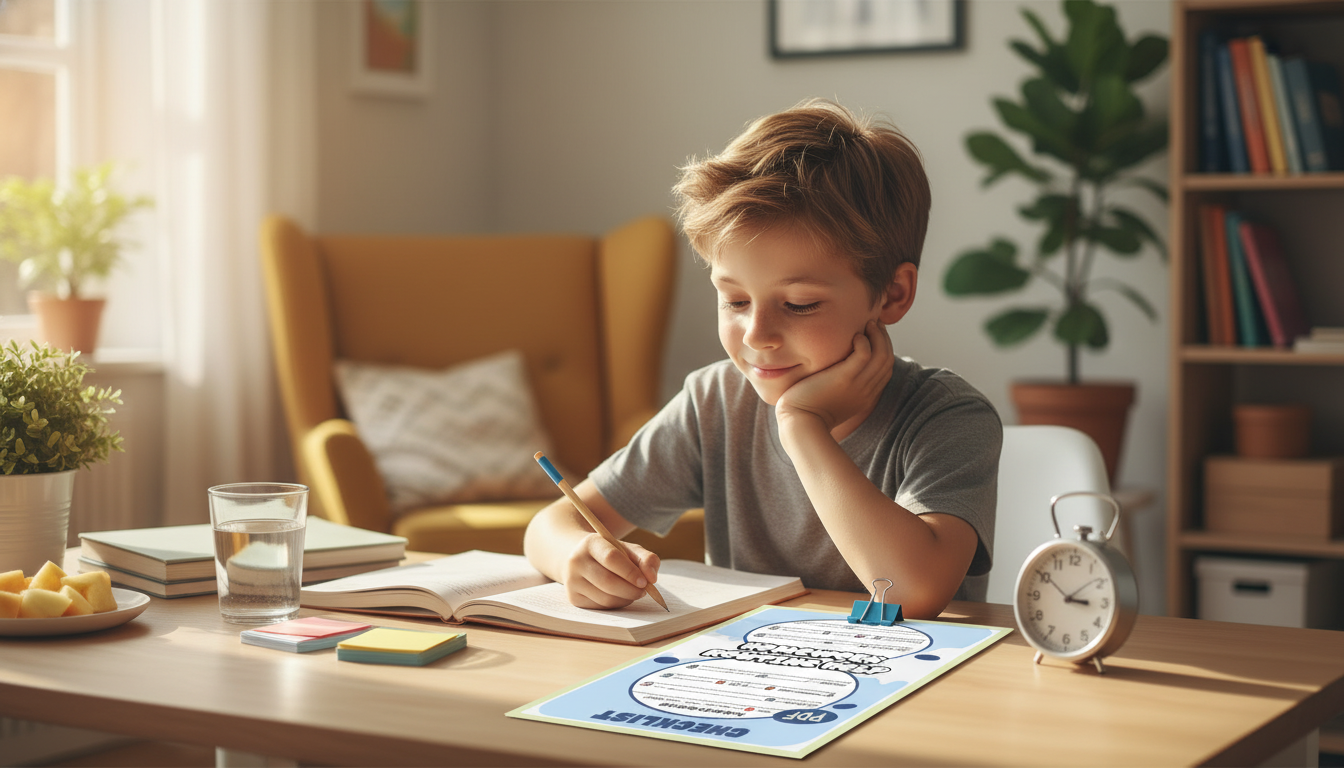
Homework Without the Nightly Drama: A Calm After-School Checklist Routine
Afternoons can spiral when homework collides with hunger, fatigue, and distractions. A simple, repeatable routine helps children shift from school mode to home mode without power struggles—so evenings feel lighter for everyone. Below is a step-by-step homework flow, an easy checklist approach that replaces repeated reminders, and quick tweaks for common roadblocks like procrastination, perfectionism, and constant questions.
Why homework melts down after school
When a child walks in the door, they’re not starting from zero—they’re often arriving already spent. Understanding the most common “why” behind after-school blowups makes it easier to respond with structure instead of stress.
- Transition fatigue: Children often need decompression time before focusing again.
- Basic needs first: Hunger, thirst, movement, and connection strongly affect attention and mood.
- Unclear expectations: “Do your homework” is vague; kids do better with visible steps and a finish line.
- Too many decisions: Deciding where to work, what to start, and how long it will take can trigger avoidance.
- Escalation loops: Repeated reminders can feel like nagging, which increases resistance and stress.
If evenings are consistently rough, also consider the basics that amplify emotional reactivity—sleep, nutrition, and stress load. Helpful starting points include guidance from American Academy of Pediatrics (HealthyChildren.org), sleep recommendations from the CDC, and family-friendly stress resources from the American Psychological Association.
A calm afternoon flow that works on busy days
The goal isn’t a perfect, quiet household. It’s a predictable sequence that reduces decision-making and gives your child a clear path from “just got home” to “done and packed.” Keep the steps the same even when the timing changes.
Step 1 — Reset (10–20 minutes)
Snack + water, a quick chat, and a movement break (walk the dog, trampoline, shoot hoops, dance to one song) to discharge energy.
Step 2 — Setup (3–5 minutes)
Choose the workspace, gather materials, silence notifications, and open the assignment list. A small “home base” basket or tray helps everything land in one place.
Step 3 — Plan (2 minutes)
Pick the first small task and estimate time. Set a timer for a short sprint so the work has edges and an end.
Step 4 — Focus sprint (10–20 minutes)
One task, one timer. Adults keep commentary minimal unless help is requested—hovering often increases pressure and slows momentum.
Step 5 — Micro-break (2–5 minutes)
Stretch, bathroom, refill water, quick lap around the house—then return to the next sprint before the break turns into a new transition.
Step 6 — Check and pack (3–5 minutes)
Confirm answers, put completed work in the backpack, and note anything unfinished (email teacher, add to planner, pack materials). This step prevents the “it’s done… wait, where is it?” scramble in the morning.
| Routine style | Best for | What it looks like |
|---|---|---|
| Quick-start | Kids who lose momentum if they wait | Arrive home → snack while reviewing assignments → 15-minute sprint → short break → finish/pack |
| Decompress-first | Kids who are emotionally tapped out | Arrive home → 15-minute reset → set up desk → two short sprints → check/pack |
| Chunked-evening | Heavy workload days | Reset → 20-minute sprint → dinner → 20-minute sprint → check/pack → relax |
Turn reminders into a checklist (so you don’t have to repeat yourself)
A checklist works because it moves the “parent voice” onto paper. Instead of repeating directions, you can point to the next step. Over time, kids internalize the sequence and the routine becomes more automatic.
- Post the checklist where homework happens; keep it visible and consistent.
- Use clear, child-friendly verbs: “Start timer,” “Do 5 problems,” “Check answers,” “Pack bag.”
- Include “Ask for help” as a step to reduce helplessness and cut down interruptions.
- Add a defined end: “Backpack packed + workspace cleared” signals completion.
- Start with fewer steps for younger kids; expand as independence grows.
For a ready-to-use version that matches the flow above, use the Homework Without the Nightly Drama checklist (printable digital download) as a fridge sheet, binder insert, or tablet annotation.
Common friction points and quick fixes
For adults, a calmer tone is easier to access when you’re not running on fumes. If you want a short, daily reset for your own mindset, Daily Affirmations for Abundant Wealth (audio course) can be used during the commute, while making dinner, or right before the homework block—especially on weeks when stress feels higher than usual.
Make it age-appropriate (and build independence over time)
A printable checklist that keeps afternoons steady
If you want to start today with zero guesswork, the Homework Without the Nightly Drama – Child Homework Routine Help Checklist for Calm Afternoons & Stress-Free Evenings (Printable Digital Download) is built around short sprints, quick breaks, and a clear finish line.
FAQ
How long should a homework routine take each day?
It varies by age and workload, but many kids do best with short focus sprints (10–20 minutes) with brief breaks. Build in a consistent “check + pack” finish so the work truly ends and doesn’t spill into bedtime.
What if my child refuses to start homework?
Start with a reset (snack, water, movement), then offer a tiny starter task with a 10-minute timer so “starting” feels doable. Give limited choices and keep the first sprint lecture-free; momentum usually follows action.
Is a printable checklist better than a digital one?
Either can work: printable is highly visible and hard to ignore, while digital travels easily and can be reused on a tablet. The best choice is the one your child will actually look at consistently.











Leave a comment