AI Welcome Email Series: 5 Emails That Feel Human
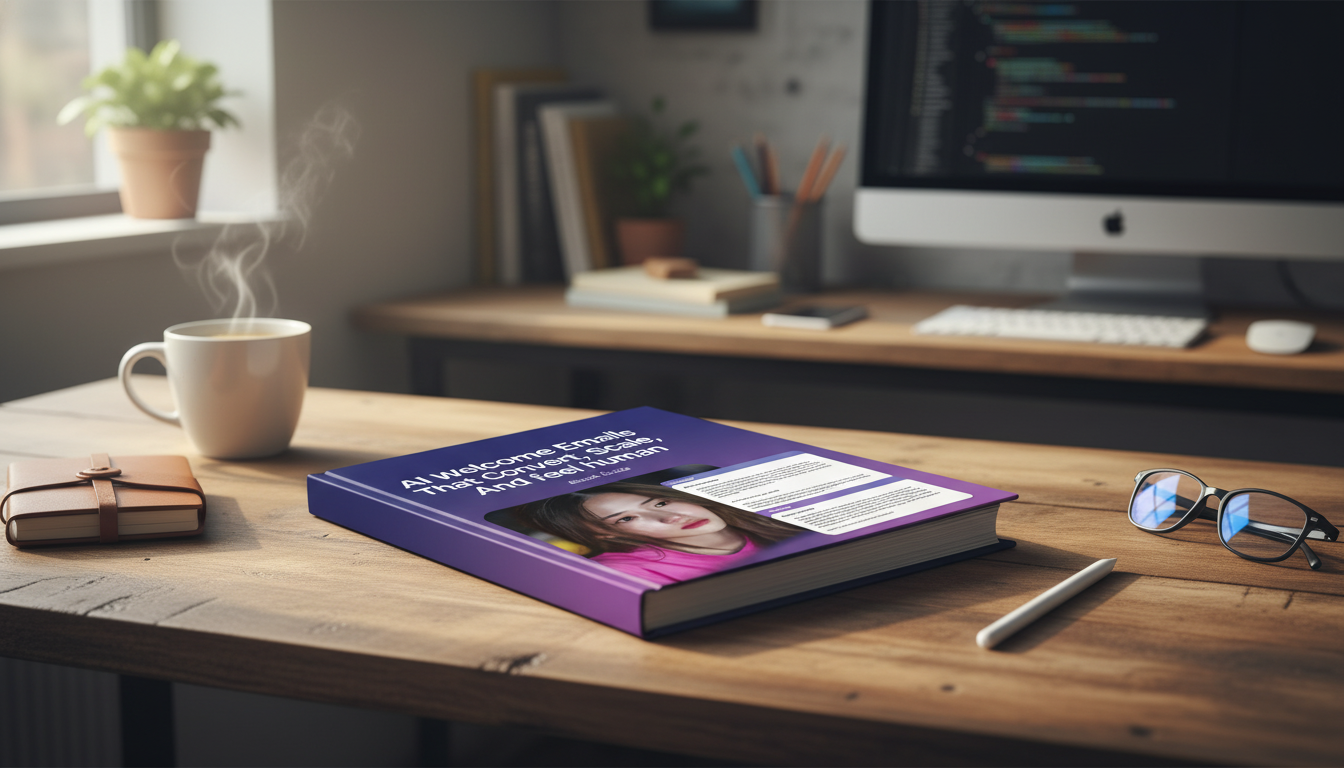
AI Welcome Emails That Convert, Scale, And Feel Human: A Practical Guide to High-Performing Welcome Series Copy
Welcome emails set the tone for every future send—yet many sequences feel generic, overly salesy, or impossible to personalize at scale. A high-performing welcome series does something simpler (and harder): it makes a new subscriber feel seen, gives them one useful step they can take right away, and steadily removes the friction that keeps “interested” from becoming “ready to buy.” For more guidance, see B2B Email Marketing Best Practices | Templates & Automation.
Below is a practical system for building a welcome sequence that reads like a real person wrote it—while still being efficient enough to run across multiple segments and offers. For further reading, see Real-World Email Campaign Templates to Improve Conversions.
What a “human” welcome series actually does
A “human” welcome series isn’t about jokes, emojis, or oversharing. It’s about clarity, consistency, and relevance—delivered in a voice that doesn’t try too hard.
- Sets expectations fast: Say what arrives next, how often, and what kind of value the subscriber can count on.
- Creates trust cues: Specific details, calm language, and a consistent point of view beat hype every time.
- Reduces buyer friction: Answer silent objections before your first real pitch (time, cost, complexity, “Will this work for me?”).
- Builds a simple narrative arc: Problem → proof → plan → invitation keeps the sequence moving without feeling pushy.
- Uses personalization without creepiness: Reference what they asked for and what they clicked—without sounding like you’re watching them.
The 5-email welcome sequence framework (with goals for each email)
This structure fits most e-commerce and digital products, especially when you want to build trust quickly and still drive revenue within the first week.
Email 1 (Immediate): deliver + quick win
Deliver what they signed up for (or confirm the subscription), then offer one “two-minute” win. Keep it short, skimmable, and confident.
Email 2 (Day 1): origin + empathy
Use the subscriber’s language to name the problem. Share a specific moment that shows you understand what they’re dealing with—without turning it into a memoir.
Email 3 (Day 2–3): proof + value
Provide proof in plain English: a mini case study, a before/after snapshot, or a teachable method that demonstrates real competence.
Email 4 (Day 4–5): segmentation
Ask one low-effort question or present two or three links that let subscribers self-select. This lets you tailor future sends without building a complicated quiz funnel.
Email 5 (Day 6–7): offer + risk reducer
Make one clear recommendation and reduce uncertainty with a preview, FAQ-style bullets, or a simple guarantee. One email, one primary action.
| Primary purpose | Tone to aim for | Must-include element | |
|---|---|---|---|
| 1 | Confirm & deliver | Warm and concise | Clear expectation statement |
| 2 | Build connection | Personal and relatable | Specific moment/problem story |
| 3 | Build belief | Helpful and authoritative | Tangible proof or mini-case |
| 4 | Personalize | Curious and service-oriented | Simple choice links |
| 5 | Convert | Confident and direct | Single CTA + risk reducer |
How AI helps without making emails feel synthetic
AI is most useful when it supports your thinking, not when it replaces your voice. The best workflow is “structure first, humanity second.”
If you want a done-with-you framework that turns the five-email structure into ready-to-edit drafts, the AI Welcome Emails That Convert, Scale, And Feel Human (eBook guide) is built for fast drafting without losing a conversational, consistent tone.
Personalization that scales: segments, triggers, and content blocks
For example, if you sell to creators, you can segment by tool interest: “image generation,” “copy,” or “workflow.” Then swap a single recommendation block—like pointing Midjourney-focused subscribers toward Prompt Like a Pro, See Like a Visionary – Midjourney Prompt Guide for Creators—while keeping the overall welcome narrative intact.
Copy patterns that lift conversions (without sounding pushy)
Benchmark-wise, welcome emails often outperform regular campaigns; keeping your sequence tight and relevant helps you capitalize on that early attention window. For reference, see aggregate benchmark reporting from Mailchimp and email performance research shared by Litmus.
Automation setup checks that protect deliverability and engagement
A ready-to-use resource for writing welcome emails faster
If your challenge is speed without sacrificing voice, a structured guide can help you build once and reuse across segments. The AI Welcome Emails That Convert, Scale, And Feel Human | eBook Guide is designed around reusable components (story, proof, CTA, segmentation links) so you can scale your welcome series while keeping it conversational. The strongest results come from pairing the framework with your real customer language, real constraints, and real examples.
FAQ
How many emails should a welcome series include?
Most brands do best with 3–7 emails, depending on buying cycle and product complexity. A common approach is a 5-email sequence spaced across a week; extend it for complex, high-consideration offers or shorten it for impulse-buy products where speed matters.
How can AI-written welcome emails avoid sounding robotic?
Use AI to build structure and generate a few different drafts, then revise with human specifics: real stories, concrete outcomes, and the exact words customers use. Apply a consistent tone checklist and trim anything that reads like generic marketing filler.
What should the first welcome email say after someone subscribes?
Deliver the promised value immediately, set expectations for what’s coming next, and give one quick win or next step. End with a low-friction reply prompt (one simple question) to start a two-way conversation.







Leave a comment