Audio Wealth Affirmations: Calm, Consistent Money Mindset
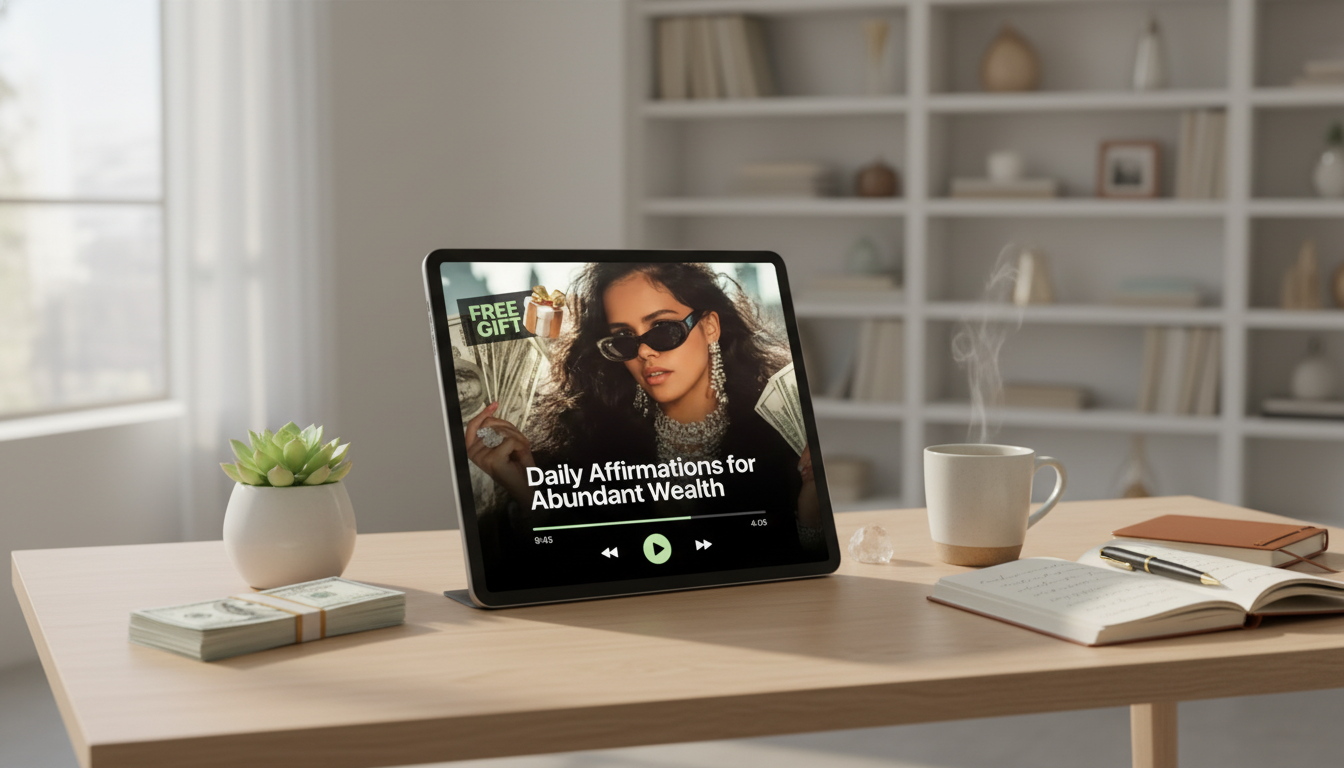
Daily Affirmations for Abundant Wealth: building a calmer, smarter money mindset
A consistent affirmation practice can help interrupt unhelpful money narratives, strengthen a sense of capability, and support more intentional financial choices. An audio-based routine makes it easier to stay consistent—especially during commutes, morning routines, or wind-down time. The most useful wealth affirmations don’t promise instant windfalls; they reinforce attitudes and identities that make practical money habits easier to maintain.
If you want a guided option you can press play on daily, Daily Affirmations for Abundant Wealth | Audio Course is designed to support prosperity-focused habits through repetition, pacing, and structure.
What “abundant wealth” affirmations are (and what they aren’t)
Affirmations are short, intentional statements meant to reinforce a preferred belief, identity, or value-driven behavior pattern—such as “I manage money with calm and clarity.” They work best when they feel believable, connect to what you actually care about, and point your attention toward actions you can take.
They aren’t a substitute for budgeting, earning skills, investing education, or professional financial advice. Instead, think of them as a mindset and behavior-support tool: they can reduce avoidance, soften shame, and help you stay steady enough to do the practical steps that build stability.
If a line triggers resistance (“That’s not true”), you don’t have to force it. A “bridge belief” version usually lands better, keeps the practice consistent, and naturally upgrades over time as you gather evidence.
Examples of bridge-belief affirmations for money and prosperity
| Common block | Bridge belief | Action to pair with it (2–5 minutes) |
|---|---|---|
| “Money is stressful.” | “I can handle money one step at a time.” | Open your banking app and review balances without judgment. |
| “I never have enough.” | “I’m building stability through consistent choices.” | Automate a small transfer to savings. |
| “I’m bad with money.” | “I’m becoming more skilled with money.” | Track today’s spending in one category. |
| “Prosperity isn’t for me.” | “I deserve to pursue financial well-being.” | List one income-improving skill to practice this week. |
| “I can’t charge more.” | “My work creates real value.” | Draft one negotiation sentence or update your rate card. |
Why audio affirmations can be easier to stick with
Audio reduces friction. On low-energy days, listening can feel doable when journaling or long routines don’t. A pre-recorded sequence also removes the daily “What should I say?” decision, which makes repetition simple and consistent.
Audio is easy to pair with existing routines—walking, showering, stretching, tidying, commuting—so the practice becomes automatic through habit stacking. A calm cadence can also help your nervous system downshift, which matters because money stress often shows up as tension, urgency, or avoidance.
When the same track is repeated daily, you’re not chasing intensity; you’re reinforcing a stable identity shift: “I’m the kind of person who faces money with clarity and follows through.”
How to use a daily wealth-affirmation audio course effectively
Consistency beats “perfect.” Pick a listening window that naturally fits your day: morning for direction-setting, midday for a stress reset, or evening for reframing and release. Then commit to a short trial period—7 to 21 days—before judging results. Early progress usually shows up as calmer money behavior, not sudden external changes.
A helpful technique is “say it with evidence.” After a line, mentally recall a small proof point: you paid a bill on time, you looked at your bank balance, you declined an impulse purchase, you learned something new, you followed a plan. This makes the statement feel grounded and trains your brain to notice progress.
Keep multitasking low-stress while you listen. Avoid activities that spike agitation (like doomscrolling). Better pairings: walking, gentle stretching, making your bed, prepping lunch, or a quick tidy.
A simple daily ritual for prosperity and abundance manifestation
What to expect: realistic outcomes over time
Daily Affirmations for Abundant Wealth (Audio Course): who it’s best for
Entrepreneurs and creatives often benefit too—particularly around pricing, receiving, and visibility—because steady self-talk supports steadier action. Explore the guided format here: Daily Affirmations for Abundant Wealth | Audio Course.
Pairing tools and routines that strengthen results
- Weekly “money date” (15–30 minutes): review accounts, plan bills, and choose one improvement task.
- One “abundance action” per day: apply for a role, pitch a client, practice an income skill, or negotiate a rate.
- Environment cue: a specific chair, headphones, or morning beverage that signals “this is my money mindset time.”
- Confidence support: if self-doubt blocks earning actions, a short confidence routine can improve follow-through. A guided option is Build Unshakable Confidence for Dating in 5 Days | Audio Program, which can complement mindset work by strengthening calm, assertive self-presentation.
Helpful background reading (optional)
For a deeper look at the psychology behind self-affirmation and behavior change, see the APA Dictionary of Psychology definition of self-affirmation, an overview of research on self-affirmation and behavior change at the National Library of Medicine (PMC), and James Clear’s writing on identity-based habits.
FAQ
How long should daily wealth affirmations take each day?
Five to fifteen minutes is realistic for most schedules. Pair the listening with one small money-aligned action (like checking a budget category or transferring $5 to savings) to turn mindset into momentum.
Do affirmations work if there is doubt or resistance?
Yes—when the wording is adjusted to a bridge belief you can honestly practice. Add “I’m learning to…” and then recall a small piece of evidence (a bill paid, a purchase paused, a plan followed) to make the statement feel grounded.
When is the best time to listen to prosperity affirmations?
Morning is ideal for setting direction, midday is great for a stress reset, and evening supports reframing and release. The best time is the one you can attach to an existing routine—walks, showers, commuting—so it happens consistently.












Leave a comment