Family Bonding Pack: Printable Activities for Real Quality Time
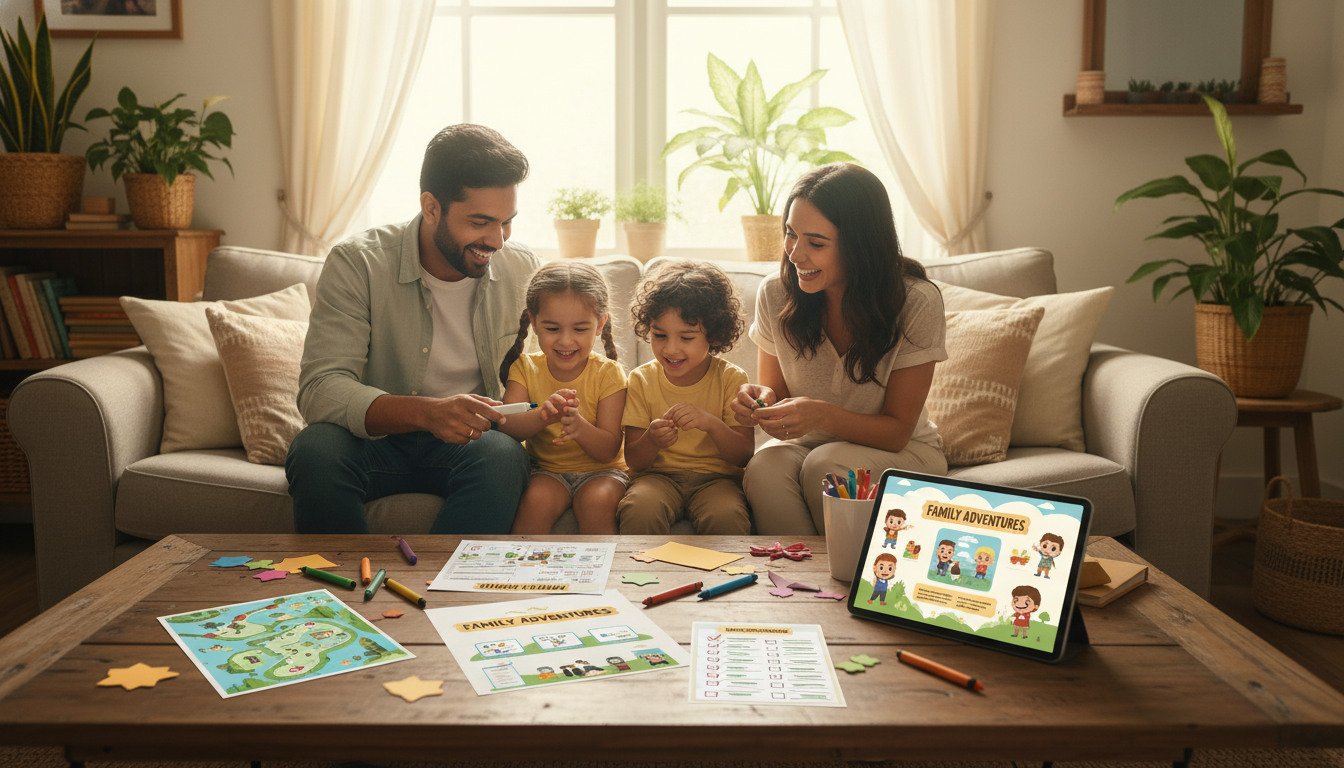
Stronger Together: A Family Bonding Pack for Meaningful At-Home and Outdoor Time
Busy schedules, screens, and changing routines can make it surprisingly hard to get consistent quality time. This digital Family Bonding Pack is built to simplify connection with ready-to-use printable activities, prompts, and a family time checklist—so planning takes minutes and the focus stays on being together.
Instead of relying on “big” outings or perfectly planned weekends, the pack helps families build small, repeatable moments that add up: a quick conversation game after dinner, a simple teamwork challenge on a rainy evening, or a walk with a few questions that pull everyone into the present.
What the Family Bonding Pack helps families do
- Turn “someday” quality time into a realistic weekly rhythm with quick, low-prep activities.
- Create moments of connection for kids and parents through shared conversation, play, and teamwork.
- Reduce decision fatigue by offering a clear menu of options for different moods, weather, and time limits.
- Make family time visible and repeatable using a simple checklist approach.
- Support kinder communication with prompts that encourage listening, gratitude, and encouragement.
These ideas align well with widely shared guidance on positive parenting and healthy family communication, including resources from the American Academy of Pediatrics and the American Psychological Association.
What’s included (and how families typically use it)
- Digital activities guide: pick an activity, print (or use on a tablet), and start within minutes.
- Printable at-home activities: ideal for weekdays, quiet evenings, or rainy days.
- Outdoor connection activities: simple ideas that work in a yard, park, sidewalk, or neighborhood walk.
- Family time checklist: a lightweight way to track what was tried and what everyone enjoyed.
- eBook format: easy to store, reprint, and revisit as kids grow and interests change.
Quick look at activity types and when they fit best
| Activity type | Best for | Time needed | Prep level | Example outcomes |
|---|---|---|---|---|
| At-home connection | Weeknights, low-energy days | 10–30 min | Low | Better conversations, calmer transitions |
| Outdoor connection | Weekends, after school, high-energy days | 15–45 min | Low | Teamwork, movement, shared discovery |
| Checklist-based planning | Families who want consistency | 5 min to choose | Very low | More follow-through, fewer skipped weeks |
A simple routine that keeps family time consistent
- Choose a predictable window (even 15 minutes): after dinner, before bedtime, or Saturday morning.
- Let each family member vote: rotate choices so everyone gets a turn to “pick the vibe.”
- Use a short start ritual: a snack, a quick high/low share, or a one-minute breathing reset.
- Keep endings easy: one appreciation each, check off the activity, and pick the next option.
- Aim for consistency over perfection: small repeats build trust and closeness.
If you’re parenting younger kids, quick and consistent routines are especially helpful—simple, repeatable structures are also emphasized in practical guidance like the CDC’s Essentials for Parenting.
At-home connection ideas that don’t require extra supplies
- Conversation starters that go beyond “How was school?” Use kid-friendly prompts that make it easier to share without pressure.
- Mini teamwork challenges: build something from household items, create a family handshake, or solve a puzzle together.
- Acts-of-kindness moments: write quick notes to each other, try a “compliment circle,” or start a gratitude jar.
- Creative play: storytelling rounds, drawing swaps, or “guess the sound” listening games.
- Calm connection for tough days: read-aloud time, gentle stretches, or a short reflection prompt that helps everyone reset.
Many families find the sweet spot is having a few “no-brainer” favorites ready for weeknights—options that don’t require a special setup, a big clean-up, or perfect moods.
Outdoor connection ideas that work almost anywhere
- Walk-and-talk prompts: one question per block (or per minute) makes a simple walk feel purposeful.
- Scavenger-style noticing games: colors, shapes, textures, or “five things that are new today.”
- Team missions: plan a tiny family adventure, map a route, or take turns leading the group.
- Movement-based bonding: relay challenges, balance games, or simple cooperative sports.
- Nature-based reflection: share one thing appreciated, one thing learned, and one thing to try next time.
Outdoor connection doesn’t have to mean hiking trails or elaborate plans. A sidewalk loop, a nearby green space, or a small yard can be enough—especially when the goal is shared attention, not distance.
Using the checklist to build momentum (without pressure)
Adapting for different ages and family situations
Digital download details and practical printing tips
Recommended digital downloads
If you want a ready-to-use set of printable prompts and activities, start here: Stronger Together: Family Bonding Pack. It’s designed to cut planning time and make it easier to follow through on the family time you already want.
For parents who also want a simple audio routine that supports a calmer, more intentional mindset during busy seasons, consider pairing it with Daily Affirmations for Abundant Wealth as a quick solo reset before (or after) family time.
FAQ
What ages does the Family Bonding Pack work best for?
It’s flexible for young kids through tweens and teens. For younger children, simplify prompts and keep activities short; for older kids, give them more autonomy (let them choose) and focus on side-by-side connection like walks and projects.
Do the activities require special supplies or a lot of prep?
No—most are designed to be low-prep and use household basics. Keeping a small “family time kit” (pens, tape, a ball, and a notebook) makes it even easier to start quickly.
How often should a family use the checklist to see a difference?
A realistic cadence is 2–4 times per week, even if it’s only 10–15 minutes. Consistency matters more than length, and small routines repeated over time tend to create the biggest shift.












Leave a comment