Hair Loss & Nutrients: Labs, Deficiencies, and a Plan

Understanding Hair Loss from the Inside Out: Nutrients, Biology, and a Practical Plan for Stronger Hair
Hair shedding can be normal, but persistent thinning often has more than one driver. Alongside genetics, stress, hormones, medications, and scalp health, nutrient status can influence the hair growth cycle, strand strength, and the body’s ability to build keratin. The goal isn’t to chase a “magic vitamin,” but to understand what hair needs to grow, what common gaps look like, what to test with a clinician, and how to build a realistic routine that supports stronger hair over time.
How hair actually grows: the cycle that makes shedding look worse than it is
Hair follicles move through a repeating cycle: growth (anagen), transition (catagen), and rest/shedding (telogen). At any given time, many follicles are growing while a smaller portion is resting. When a larger-than-usual number of follicles shift into telogen, daily shedding can spike even though the follicles themselves are still capable of producing new hair.
One reason shedding feels sudden is timing. Telogen effluvium often shows up around 2–3 months after a trigger such as illness, major stress, postpartum changes, crash dieting, or certain medications. That delay can make the cause feel “out of nowhere,” even when there was a clear event a few months earlier.
Nutrition changes also don’t act instantly. Even when a deficiency is corrected, it can take multiple growth cycles before the difference shows up in the mirror. Many people notice reduced shedding first, followed by improved density later.
Red flags that warrant medical evaluation include sudden patchy loss, scalp pain or burning, scarring, eyebrow or eyelash loss, or systemic symptoms like fatigue, heavy periods, or unintentional weight change. For a broad overview of causes and evaluation, the American Academy of Dermatology’s resource is a helpful starting point: https://www.aad.org/public/diseases/hair-loss.
Nutrient deficiencies most tied to thinning: what each one does and how it shows up
When nutrient status affects hair, it usually does so by limiting the building blocks for keratin and/or the energy required by fast-dividing follicle cells. The most commonly discussed gaps include iron stores (ferritin), vitamin D, zinc, protein/overall calories, essential fatty acids, and sometimes B12/folate depending on diet and absorption.
Iron (low ferritin)
Iron supports oxygen delivery and cellular energy. Low iron stores are frequently discussed in diffuse shedding, especially with heavy menstrual bleeding, low dietary intake, or postpartum depletion. Guidance on iron and supplementation safety can be found through the NIH Office of Dietary Supplements: https://ods.od.nih.gov/factsheets/Iron-HealthProfessional/.
Vitamin D
Vitamin D is involved in immune signaling and follicle cycling. Low levels are common, particularly in low-sunlight regions or in people who spend most of the day indoors. NIH’s vitamin D overview is here: https://ods.od.nih.gov/factsheets/VitaminD-HealthProfessional/.
Zinc
Zinc supports protein synthesis and cell division, which matters for tissues that renew quickly (like hair). Deficiency can show up with brittle hair, increased shedding, slow wound healing, or skin changes. Interpretation can be tricky, so results are best reviewed with a clinician in context.
Protein and overall calories
Hair is not essential for survival, so during energy shortage the body may “budget” resources away from growth. Restrictive dieting can trigger shedding even when basic lab values look normal. Signs that energy intake may be too low include low energy, unintentional weight loss, and menstrual cycle disruption.
Essential fatty acids
B12 and folate
| Nutrient | Why it matters | Common signs beyond hair | Food sources | Testing to discuss with a clinician |
|---|---|---|---|---|
| Iron (ferritin) | Supports energy and growth processes in fast-dividing cells | Fatigue, brittle nails, shortness of breath, heavy periods | Red meat, lentils, beans, spinach (pair with vitamin C) | Ferritin, CBC, iron/TIBC |
| Vitamin D | Linked to follicle cycling and immune balance | Low mood, muscle aches, frequent illness | Fatty fish, fortified dairy/plant milks, sunlight | 25(OH)D blood test |
| Zinc | Protein synthesis, wound healing, scalp/skin integrity | Slow wound healing, taste changes, dermatitis | Oysters, beef, pumpkin seeds, chickpeas | Serum zinc (interpret with clinician) |
| Protein/Calories | Hair shafts are protein; energy availability affects growth priority | Unintended weight loss, low energy, missed periods | Eggs, poultry, fish, tofu, Greek yogurt, legumes | Diet history; labs as indicated |
| B12/Folate | Supports red blood cell production and cell division | Tingling, fatigue, mouth sores | Meat, dairy, fortified foods; leafy greens for folate | B12, folate, CBC (± MMA) |
Why “just take a supplement” can backfire
A simple, science-aligned routine: food first, then targeted support
When to get labs and what to ask about
A guided next step for nutrient-focused hair support
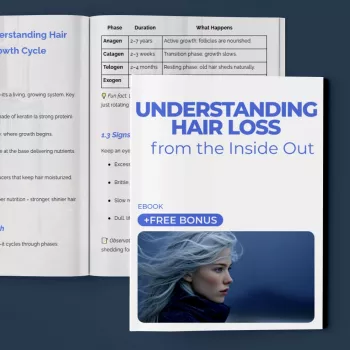
If a structured plan feels easier than piecing together advice from random sources, Understanding Hair Loss from the Inside Out (digital download) organizes common deficiency patterns, food strategies, and practical next actions in one place—designed to match real hair-growth timing so expectations stay realistic.
Since stress can amplify shedding triggers, a complementary option for building a calmer daily routine is Daily Affirmations for Abundant Wealth | Audio Course, which can be used as a short, consistent practice alongside nutrition and sleep improvements.
FAQ
How long after fixing a nutrient deficiency can hair shedding improve?
Because hair follows a growth cycle, many people notice reduced shedding in about 8–12 weeks after correcting a confirmed deficiency or trigger. Visible changes in thickness often take 3–6+ months, depending on the cause and consistency.
Which vitamin deficiency is most linked to hair loss?
There isn’t one single vitamin that explains most hair loss. Iron stores (ferritin), vitamin D, zinc, and overall protein/energy intake are frequently discussed, and labs with clinician guidance are more reliable than guessing.
Can too many supplements cause hair loss?
Yes. Excess vitamin A, selenium, and high-dose zinc can contribute to shedding or create imbalances that affect hair and scalp health. Checking labels, avoiding megadoses, and coordinating supplements with medical care helps reduce that risk.










Leave a comment