Long Layover Survival: Checklist, Sleep, Safety & Timing
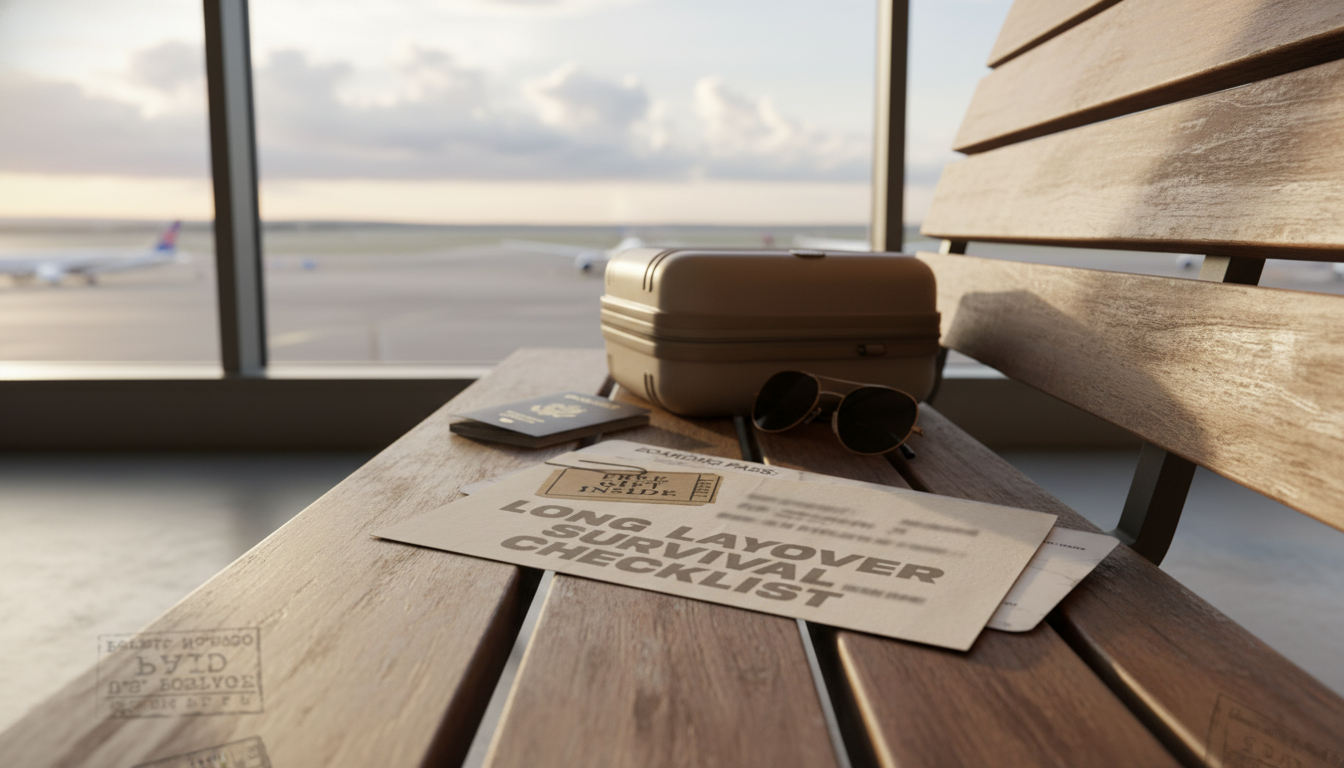
Long Layover Survival Checklist: What to Do During a Long Layover
A long layover can be a reset, a mini-adventure, or a slow grind—depending on preparation. The goal is simple: protect your connection, protect your valuables, and use the time in a way that leaves you feeling better (not worse) when boarding starts. The checklist below breaks your stop into practical steps—what to do first, how to pace the hours, and how to avoid the classic mistakes that turn “extra time” into stress.
First 10 Minutes: Lock in the essentials
- Confirm the next flight’s gate, boarding time, and any terminal changes. Set two alarms: one for when you must leave your spot, and one for boarding time.
- Check baggage rules: are checked bags through-checked to your final destination, and can carry-ons be stored (or do they have to stay with you)?
- Save offline what matters: boarding pass, itinerary, and an airport map. If appropriate for your situation, keep passport/visa photos stored securely on your device.
- Find your “base”: near restrooms, water, and power—without blocking foot traffic or sitting in a chaotic bottleneck.
If you want a ready-to-go version you can keep on your phone, the Long Layover Survival Checklist: What to Do During a Long Layover (digital download) is built for quick decisions when you’re tired or juggling bags.
Know your layover type: domestic, international, or overnight
- International connections may require security re-screening, passport control, or transit visa rules—verify before leaving the secure area (airside). When in doubt, check guidance from official sources like U.S. Department of State — International Travel.
- Overnight layovers prioritize sleep strategy and safety: decide where to rest, what stays on-body, and when to relocate closer to your gate as morning crowds build.
- “Short-but-long” (4–6 hours) is often best for a meal, a walk, and a recharge—not a risky city trip that depends on perfect timing.
- Very long (8+ hours) may justify lounge access, a day room, or a controlled airport-hotel break if immigration rules allow.
A timeline plan: what to do based on hours available
Choose a plan that fits your time and leaves buffer for security lines, terminal changes, and gate moves. If traveling with kids, add extra time for bathrooms, snacks, and decompression. If traveling for business, front-load deep work early, then switch to lighter tasks so you don’t hit a wall right before boarding.
Layover game plan by time available
| Time available | Best focus | Good activities | Don’t risk |
|---|---|---|---|
| 2–3 hours | Stay airside and keep it simple | Bathroom reset, quick meal, refill water, download entertainment | Leaving the terminal, long sit-down meals far from the gate |
| 4–6 hours | Recharge + movement | Power nap (20–40 min), lounge pass (if worth it), terminal walk, light work sprint | Shopping sprees that eat buffer time, relying on airport Wi‑Fi for critical tasks only |
| 6–8 hours | Real rest and organization | Shower (lounge), longer meal, sort photos/files, call family, stretch routine | Unplanned city trips, napping without alarms |
| 8–12+ hours | Sleep + hygiene + controlled exploration | Day room/airport hotel, guided lounge stay, curated terminal activities, carefully planned outside trip if permitted | Storing valuables in easy-to-grab pockets, wandering without a return-time plan |
Sleep without missing your flight
Food, water, and energy management
Airport rules and screening procedures can change based on location and itinerary; for U.S. travel and screening guidance, check U.S. Transportation Security Administration (TSA) — Travel.
Hygiene reset with minimal gear
Move, stretch, and prevent stiffness
Work and entertainment that actually fits the setting
If you want something calming and easy to listen to during long waits or while trying to fall asleep, Daily Affirmations for Abundant Wealth | Audio Course | Money Mindset & Prosperity | Abundance Manifestation is a simple audio option that doesn’t require a screen.
Safety and security habits during long waits
Leaving the airport: a decision checklist
- Confirm entry requirements (passport validity, visa/transit rules) and whether you must re-clear security on return. For international travel requirements, the International Air Transport Association (IATA) — Travel information can be a helpful starting point.
- Account for time sinks: immigration lines, airport-to-city transit, and the return trip—then add buffer.
- Only leave if there’s a clear plan: destination, route, meal/activity, and a hard turnaround time.
- If unsure, choose an airport-only plan; a calm connection beats a rushed one.
Printable checklist option
A compact checklist reduces decision fatigue and helps you avoid the classic layover mistakes: losing track of time, letting your phone die, misplacing documents, or settling in too far from your gate. If you prefer a structured, quick-scan format you can reuse on every trip, the Long Layover Survival Checklist: What to Do During a Long Layover includes timing buffers, security reminders, hygiene items, and a simple activity planner.
FAQ
How long should the buffer be before boarding during a long layover?
Aim to be at the gate 45–60 minutes before boarding for most trips, and 60–90 minutes if you expect a terminal change, re-screening, or a crowded hub. Set alarms for both “leave your spot” and “boarding,” so delays in restrooms or food lines don’t snowball.
Is it safe to sleep in an airport during a long layover?
It can be, if you choose a visible area near staffed help, keep passport/wallet/phone on-body, and set multiple alarms. For overnight stops, a lounge or airport hotel/day room is often a safer, more restful option.
Can a layover be long enough to leave the airport?
Yes, but only after checking entry/visa rules, estimating immigration and re-screening time, and adding a firm turnaround time so you return with a generous buffer. If any part of the plan feels uncertain, staying airside is usually the better call.











Leave a comment